Friday, 17 February 2012

Art Direction

The Art Director has the most important role within a game developer. They has just as much responsibility as a film director, just none of the credit that goes along with being a film director. Art directors are responsible for making sure the game has a standard visual style across the board to make for a more believable and immersive game. Characters, buildings and props are just some of the objects they will scrutinise. Even a little brick on the ground would go through the art director to make ensure its up to scratch with the rest of the environment. Is it the right size for the structure? Does the material match the time frame? Would it really crumble into those pieces if a tank went over it? These are just some question an art director will ask himself. If that is some of the questions they’ll ask over a brick imagine what they’ll do to the protagonist or the main level. They go through all of this effort to make all these assets, like foliage, buildings, props and characters as believable to the story and spirit of the game too enhance the overall experience for the player.
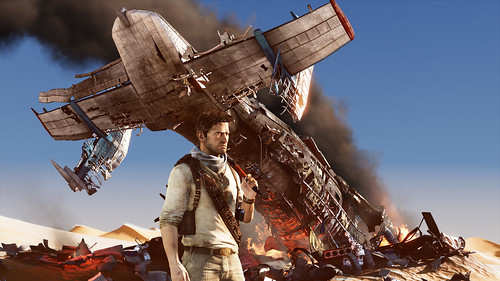
Uncharted 3 : Drake's Deception has some of the best art direction i have seen to date in a game


Art direction in games isn’t too different from films, different medium but same principle. Directors in each field both do the same, making sure the visual style is standard across the film/game, be it characters or buildings. As films generally have bigger budgets then games, art directors can go to more lengths to nail down that visual style they're aiming for, like location scouting. Having the ability to go to a real locations to get the correct visual vibe for a scene does wonders for the immersion and believability of the film. But as games are becoming more and more popular, budgets are increasing, which means the art directors from AAA studios can do the same research as their film counterparts, such as location scouting. Art directors and a team of artist will visit a location and take many photographs and videos of the environment (For example) to get the best quality 3d assests. Motorstorm developer “Evolution Studios” went to these length to get life like environments for their race tracks. Taking thousands of hi res pictures and hours upon hours of full HD video. If you want to hear more about this, take a look at this link:

http://www.definitionmagazine.com/journal/2010/5/19/making-of-motorstorm.html

Art directors are really at the top of the artistic food chain. So if anyone wants to peruse that godly like role then they have to do one thing: work, work hard, work so hard on art that they shit art after eating an art sandwich. 


Most art directors, have a somewhat relative art skill and have worked their way up the food chain from a 3D artist to an art director in 10 or so years because of that magic word, work. They need to be on top of their game technically and artistically. If a new piece of software comes out, they are the first ones to get hold of it. A conference is coming up, they’ll be there. They're worst enemy just released a AAA game, they’ll play it. All of these things help art directors become the best at the role. Having strong drawing skills is a most too, as this is how the art director will communicated his ideas to the set team for example.

Being able to quickly get your idea across by drawing is a lot more cost and time effective way of exploring ideas rather than just jumping straight into creating the environment,character etc.. As they might relise half way through building a set and saying 'oh wait, this doesnt actually work, tear it down and start again'.

The role of an art director isn’t just insuring every bit of art flows the same, but its also to manage people and time. Key skills they’ll demonstrate is leadership, they want to lead their team to success, the can only do this if they are good leaders. This is complimented by great communication skills.

Tuesday, 31 January 2012

Game Design

Before you start making assets for a game, producing the story line or anything else, you start on the game design. This is a mix of different design elements, such as: gameplay, storyline, environments and characters. This usually starts off as a proposal in the pre production phase, where the game designer has had an idea and its then fleshed out to cover the basics of the concept, gameplay, storyline, features, staff and budget estimates. But as the development goes on certain features from the proposal might not be achievable, this might be because of the budget limitations for example, so these features might have to be axed or changed.

Gameplay is the way you, the player, interacts with the game, be that the characters which populate a town or a wooden bucket on the floor which you can throw around.
Even though games have transformed from basic sprites to fully 3d models, the essence of gameplay has pretty much stayed the same- you have a goal and something is going to get in the way of you reaching that goal. PacMan had 4 ghosts, Fear had one scary little girl. Same concept but these game couldnt be further apart, you could also go on to say that even board games following this concept of reaching a goal and something/someone is stopping you. If we look back to arcade games from the 80's the whole reason you put in your hard earned cash was to get a score high enough to get your name in the top 10 (from my experience most people have the name 'Ass', odd that). But if we look at any modern online FPS shooter we dont have that highscore anymore, its pretty much been replaced with experience points and levels. A numerical number still represents your skill, its just done in a slightly different way.


Some of my personal favourite game designs are Peter Molyneux, famous for Populous, Black&White and Fable. But unfortunately has been known to over hype his games, promising amazing features which never make it into the final game ( ala Black&White with its “ground breaking” creature AI, despite this it still remains a personal favourite of mine).
Will Wright deserves an honourable mention for creating the most addicting game series, The Sims, A game with no story or goals, but somehow ended up being the best selling PC game. Making the player do all the hard work by letting them create their own stories, ingenuous!


While these people are the main designers, its not just them, its a team of designers all specialising in their own field such as level design and game mechanics, they work together to bring the whole game to life. Depending on the type of game a team could have more of specific designers than others. For instance the team behind LA Niore which is a very story driven game would have hired more writers, to make the game a more cinematic experience, which goes hand in hand with their facial capture technology. Whereas on the other hand we have games like Far Cry 1 and 2, where the level and environment design are key to the games open world gameplay, having the ability to explore when and where you want just to take in the scenery is visual bliss, complimented by their cutting edge graphics engine.


When playing a game I love to be engrossed in the world, makes for a much more enjoyable experience. But sadly the last few years ive noticed im not making that emotional connection to games as I used too. Maybe its because iv been doing game art for a good few years so im constantly looking at objects/characters in the world and thinking 'that looks good, I wonder how the artist got the shine just right on that piece of metal' or 'bah, a texture seam in an exposed area, the artist rushed this piece'. I guess its something ive got to live with, and its only going to get worse as I do more and more game art.


Friday, 27 January 2012

Pans labyrinth, a film for the artist

A Film which all aspiring artist need to watch, especially character artists, is Pans Labyrinth.


This 2006 Spanish fantasy film tells a story of a little girl, Ofelia who loves to immerse herself in the world fairy tales. We are led to believe from the opening of the film that she is the princess (or at least the spirit) of the underworld who reached the surface of the world and died shortly after. Her father, the king of the underworld knew she would return one day.

After the fantasy intro we stick to Spain, 1944, during the civil war. Ofelia is then taking into a “safe zone” with her pregnant mothers boyfriend - the general of the Spanish army. This safe zone is actually an army outpost, constantly under attack from the Spanish resistance. Ofelia being the curious girl she is, takes a wonder round the camp and finds a ruined labyrinth. This scene introduces us to one of the brilliant designed characters from the film, The Faun. Taking inspiration from Roman mythology and then using cutting edge CGI to bring it to life. It stands tall on its goat like legs, with its menacing horns twisting round protecting its head. Its desaturated earthy colours blends it into the environment, making him camouflaged which is fitting as the faun is the silent messenger for the king from the underworld, but also reflects the films dark and threatening story.


Ofelia is given task from the faun throughout the film so she can return to the underworld as the princess again.

One of these tasks she has to steal a ceremonial dagger. This task introduce my personal favourite creature, the child-eating Pale Man, who sits silently in front of a large table of bountiful food guarding this dagger. Warned not too, she starts to eat the food, waking the eerie creature up from his slumber. The creature then feels for his eyeballs rolling around on the table, finding them, he then inserts them into his hands (yes hands, thats not a typo). Then he lifts the hands too his face and suddenly opens his palms, revealing an iconic image. He then stands up, showing that hes a towering menacing creature, then proceeds to chase Ofelia, who has a close escape. The way the creature has been designed to have very little facial detail, is frightful. As humans we learn to read peoples faces from an early age to get an idea of their emotions, but when that all gets taken away, especially the eyes, we find it very hard to make a connection with them. And the fact that half of the scene he is silent, sitting at the table with an emotionless expression really adds to the unknown, building a horrible amount of brilliant tension.


The film is all in Spanish with English subtitles, but if you can handle reading while watching I highly recommend you watch this film, if not for the fantasy story then for the amazingly designed creatures.

Monday, 16 January 2012

Battlefield 3 Review

For a long time people have been waiting for the true successor to the amazing game which is Battlefield 2, and its finally here. We had Bad Company and its sequel to keep us busy for a while but its time to move on.

Since the Battlefield series has always been seen as a mulitplayer game ill be concentrating on that aspect of it in this review. Its single player is good, but its nothing to get excited for. While It does have some memorable moments, its the memorable moments you would have had from of all the other big modern FPS's released the last few years. Think of it of like a best of.

Battlefield 3, the adrenalin pumper, as I like to call it. As soon as you jump into the game for the first time you’ll be straight in the fire fight, and most likely the firing line. Bullets whizzing by your head from a hidden sniper in the distance, he missed, your screen is blurred from the suppression. As soon as you can, you leg it, taking covering behind a rock. Your safe from harm. Until a fighter jet plunges into you. This was first experience of the multiplayer. Your first time might be different, but it’ll certainly be fun and it’ll keep you on the edge. This is what the Battlefield series has been to their fans. Battlefield 3 doesn’t change it's award winning formula.


2 RPGs against a tank is better than 1


Dice has done a great job with Battlefield 3's engine – Frostbite 2.0. Its graphics are second to none, quite possible the best looking game this generation. If you’re lucky to own a pc powerful enough to run it on max (and trust me, you will need one). You’ll be double taking, thinking your screen is a window on a real battlefield. The dust kicking up as bullets hit the ground around you, the pores on your team mates face, the blinding light of your enemies tactile attachment are just some of the little elements you’ll enjoy as you immerse yourself with Battlefield 3.

Move out!


Something else you’ll found staggering is the sound. While its best enjoyed with 5.1 surround sound, i've had no issues playing it with headphones or a basic 2.1 speaker set up. But with the 5.1 setup you'll hear and feel the thud of the tank next to you as it fires. The crack in front of you then the glass shattering behind you from someone trying to franticly gun you down. Its audible heaven.


Something BF3 does well : Scale


Perks, points and unlocks have become something of a stable diet of recent online FPS's. Battlefield does it well with many unlocks all catering for the 4 different classes (Engineer, Recon, Assault and Soldier) and all the vehicles. Some unlocks will help the more stealthy players out there, who like to creep around the battlefield unseen, picking off his enemies from a distance with his personalised sniper rifle attached with his newly unlocked high zoom scope. To the players who like to go all Rambo, kitted out with the extra ammo perk, gunning down anything and everything. All the weapons, attachments and perks will keep you coming back for more, itching to play one more round so you can unlock that M98B rifle you've always wanted.

Bad Company brought us the endless fun of a physics engine, Battlefield 3 uses that same engine but has been enhanced. So no more can players feel safe hidden from a tank in a small concrete house. One shot from a tank will create a massive hole in the wall, another will complete raze it, with the roof crashing the victim inside. This completely changes how you play the game, making for some interesting tactics.

Mind your head!


A few bugs plague Battlefield but nothing game breaking, unlike the beta. These are mostly aesthetic bugs, such as bodies stuck inside objects, rubble from a collapsed building stuck in mid air, and micro stutters which effect flying a plane (although this could be a server side issue). The biggest bug i've encounter so far is a complete freeze, which comes from nowhere, and sadly, quite often too. Even the good old Ctrl+Alt+Delete doesn’t work, a restart is needed. This is annoying having to restart your PC, then find another server, then load the game. But luckily your stats are constantly being saved, not at the end of the round so everything you’ve unlocked up to the freeze will have been saved.

If you’ve got nothing planned for the next 6 months of your life and have a decent PC, pick up Battlefield 3. You wont regret it.

Graphics – 9.5
Sound – 9.5
Gameplay – 9


Score 9/10

Tuesday, 10 January 2012

Move over old game journalism, a new kids in town now

As the years move on games and gaming is becoming more popular, especially with the introduction of the Nintendo Wii, bringing gaming to the masses, making more people turn to the internet and gaming magazines to find out the latest news. With this spike of gaming popularity the last few years more and more games are being produced, and for every game out there, there is at least 1 review/preview for it. Major AAA titles will see many interviews,hands on, previews and reviews over their development cycle.

So what does this mean for gaming journalists out there?

Work, work and more work. More work to do in less time before they move onto the next AAA title to review, or that first hands on which everyone is looking forward too.

The average gaming magazine today consist of 150 pages of gaming related news. Sound like a lot doesnt it? Well it is, plus they only have 20 days to throw it all together, then do it all again for he next month. So how do they ease the load? They can hire more staff, but that means more money going out of their coffers, which wouldn’t be so bad if we wasn’t in this recession.
So to get more money rolling in they talk about all the little games out there, cutting deals with game publishes to advertise their latest AAA game. Maybe they’ll give it a perfect score if enough money is being passed under the table *wink wink*.

Back in 2007 the gaming website Gamespot.com laid off their editorial director, Jeff Gerstmann. Rumours circulated on the net that he was laid off because he gave the game Kane & Lynch a fairly poor score (which it deserved). While this was going on Eidos Interactive were investing a lot of money into marketing their game on Gamespots website, who received a cut for advertising it. Things didn’t go down well for Jeff after the poor review was released. Since this incident its become difficult for some people to take game reviews seriously, as more people think journalists are getting paid off to 'bump up' a review scores.

From what i've seen the last few years I personally prefer and objective view for anything, I like to hear the truth/facts about games and not to have things sugar coated or glaring mistakes missed out. But I feel there isn’t a place for this view in mainstream game journalism. It seems reviews have to be sugar coated to keep the publisher happy, higher review scores = more sales.

New Game Journalism (NGJ) represent a new way of reviewing games. Kieron Gillen (The author of NGJ) makes a major point that the way journalist would review games would be to list the points of the game design, production, plot, sound and graphics. The writing would not come across as that personal, thus not connecting with the reader/gamer. NGJ changes that. Journalist make sure the writing connects with reader. Making the reader understand what its like to play it, to feel it.

Although in recent years this has backfired. Any average joe can set up a blog, and most of these aren’t competent writers. They seem to mix up personal writing with being strongly opinionated, which does the exactly the opposite of connecting with the player.   

Monday, 7 November 2011

My Super Awesome Gaming History

Going back a while ago, mid 90's I think. My brother got a brand new shiny Amiga for Christmas (don’t ask which model as I really cant remember!). Watching him playing it for a few days I start to get more interested in it, as his excitement grew for it, so did mine. So a week later I decided I wanted to jump on and try it for myself. My first gaming experience started.

I spent countless hours playing games which I still vividly remember even today. Canon Fodder was a personal favourite of mine, I remember having a real connection with that game. As all your squad had names and improved as you advanced through the levels. So when you've lost one of them you’ve lost someone who you’ve seen improve and promoted throughout their digital life. To top it off he'd be replaced with some basic recruit who you knew wouldn’t survive the next level, sending you into a deep spiral. But fun never the less. Other notable mentions from this age are: Wings, Chaos Engine, Flashback.

Then going into the late 90's I started to experience the original Playstation which we got hold of on launch day. This is a time when I really fell in love with gaming. Always playing my PS1 instead of doing my homework, and then always being told “stop wasting your time playing games, that wont get you a job in the future”, well mum and dad, look at me now. I plunged many hours into Gran Turismo and its squeal with my brother trying to buy/unlock all the cars in the game. A sad day came when I (some how) stupidly wiped all the data of the memory card....brother was not happy. Of course with every other PS1 gamer on the planet I played Final Fantasy (7-9) and Metal Gear Solid to death.

1999 was a great year for me. For one it was my first trip to Disney Land Florida, its also where I picked up my first PC game. Unreal. This was my first experience of PC gaming. Before this, the PC was a evil place where I had to do home work, now its a place where I got to chill out and play games. Ever since Unreal I fell in love with PC gaming, the controls, the graphics, the sound, the games. Everything to me just seemed better on the PC, and it still does.

Years go by and we picked up the PS2 (on launch day, again). If I wasn’t playing on the PC, i'd be on the PS2, then if I had time...homework. With the launch of both GT3 and GT4 me and my brother would team up again to and play the game together. This is also the era where I discovered my passion for GTA. Too many hours I spent messing around with those game.

Years pass and Im still playing my PC games, on a PC I built myself. Bought a PS3 on release day (yet again) which I touch now and again, the PC takes up most of my gaming time.

Now what do I think the future will hold? Well seeing how we are slowing moving away from controllers in the hand and more towards a more interactive way (Kinect, Move, Wii). I can see in 5/10 years time we're going to be playing games in complete virtual reality, ala Matrix. With maybe levels and characters based entirely from our memory, making for a more personal experience. And that might put us artist into a tricky position job wise if everything is going to be created from your brain.

Stay Classy...

Tuesday, 1 November 2011

A Brief History Of Time.....For Games : Part 3

Now we are reaching a decade which is very familiar to my generation, the 2000s (naughties). Just like the 1990s we see a massive change in technology and innovation. We also see discover how costly game development has become,with some development budgets rivalling film development.

The naughties started with a bang. The follow up console of the original Playstation is launched, the Playstation 2 (released in March 2000). Which has become the best selling console of all time, racking in an impressive 150 million units sold world wide as of January 2011. A year later (November 2001 to be precise) came the PS2s main competitor, the Microsoft Xbox . This was Microsoft first try with a home console, and it did well, very well. Its launch success can mainly be put down to the impressive launch titles, mainly Halo : Combat Evolved which has now developed into a monumental earner for Microsoft. Nintendo also launched their console, the Gamecube, But it couldnt touch the success of the PS2 or Xbox.

This decade also saw the battle of the handhelds, with the release of the Nintendo Game boy Advance (released 2001), then being redesigned into the GBA SP 2 years later. Then as a little as a year little Nintendo release the DS, a very innovative bit of kit with its touch and dual screens, With Nintendo trying to milk as much money from this as possible they released a smaller (DS Lite) and later a bigger version (XL). Sony decide to jump on the band wagon and tried to compete with its Playstation Portable, although a success it couldnt touch Nintendos market share with the DS.

In the mid 2000s we saw another battle with the “Next Generation” range of consoles. Microsoft release the Xbox 360, Nintendo with the Wii and Sony with the Playstation 3. The Wii was an unpredictable hit, being sold out for 18 months straight. Nintendo got this success by targeting casual gamers with its innovative “Wiimote”, and it worked well. Very well.

Some amazing games were released in the naughties, some which I and many other gamers have played to death. We have Metal Gear Solid 2: Sons of Liberty, proving that games can also be interactive films with a total cut scene length of over 5 hours. Impressive. Other genre defining games from this decades are : Call of Duty 4; World Of Warcraft; GTA: San Andreas; Guitar Hero and Half Life 2.

One of the biggest concerns of game development is the costs. The average game in the year 2000 would cost around $1 million to develop, jump forward to 2005 and the biggest AAA titles can cost as much as $70 million. This can be due to the expectations of the average gamer who is looking for an immersive game with sparkly graphics and sound to go along with their new HDTV and Surround sound. This means the developer has to now hire more and more artist/programmers/sounds engineers and all the other people inbetween so they can hit the high expectation of the consumer.

Costs of game development are only going to increase as technology and expectations increase. Dark times could lay ahead.

Stay Classy...